
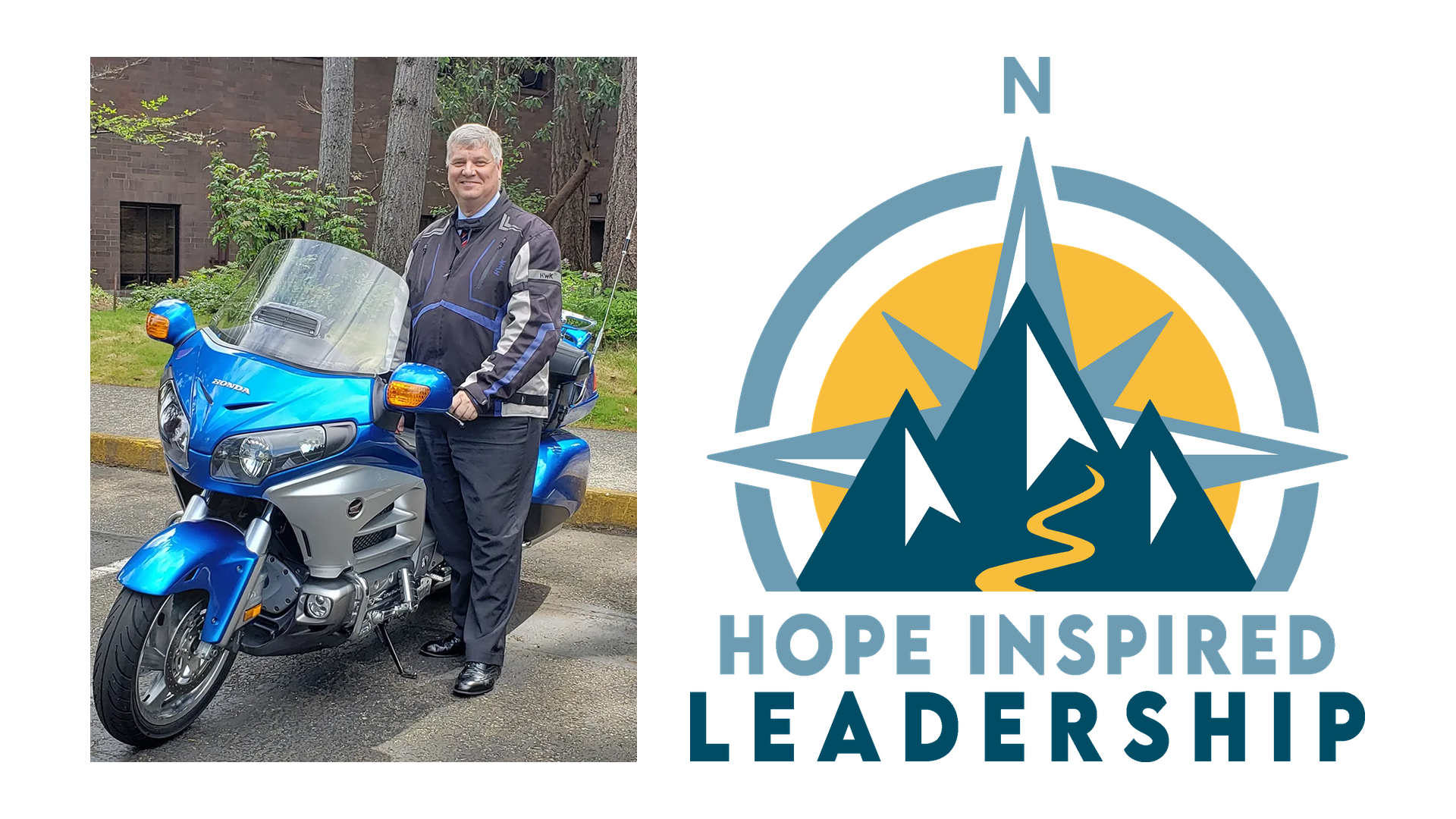
Jon Tunheim wrote the content below. He is the Thurston County Prosecuting Attorney, and one of the voices you will hear at the Hope & Culture Summit later this month (Sept 24-25, 2026) and also during our monthly Hope & Culture Labs. It is his account of a ninety-minute breakout session that changed how he thinks about leading people.
We are sharing it as he wrote it.
As I walked into a conference breakout room in Fort Worth, Texas, I had no idea how much my future would change over the next ninety minutes.
The conference was focused on working with victims and survivors of domestic violence. As an elected Prosecuting Attorney, I had become increasingly interested in how my team could better serve crime victims by incorporating trauma-informed practices into our work. I had personally prosecuted hundreds of cases involving adult and child victims dealing with trauma resulting from harm inflicted upon them, often by someone they knew and cared about. Based on its title, this breakout session appeared to offer additional insight into how we could offer hope to those impacted by trauma.
What I didn’t know was that I was about to hear a presentation on Hope Theory. I was about to learn the science of hope.
The instructor was Dr. Chan Hellman, a professor at the University of Oklahoma and founder of the Hope Research Center. Dr. Hellman introduced us to the framework and vocabulary of Hope Theory. We learned that hope is not simply an aspirational feeling about the future. Hope is a way of thinking. It is a choice. And it is measurable.
As I listened to him describe hope in those terms, I began connecting the science to my own experience. I thought about times when I had been losing hope, and how I found a way to reclaim it. I thought about the victims I worked with who were desperately searching for hope. And then I thought about my team.
I was astounded to learn that psychologists have been researching hope for more than three decades. Time and again, the research connected higher levels of hope with positive outcomes. At work, hopeful people are more productive, more resilient, more adaptable to change, and absent less often. People with high hope tend to be healthier and happier than those with low hope. In fact, hope is increasingly recognized as one of the strongest contributors to human wellness overall.
The research, combined with my own experience, led me to begin thinking about how the science of hope could help me become a better leader. The more I thought about it, the more I realized that nearly everything I had learned about leadership could be connected to hope.
I came to believe that Hope Theory may be the “theory of everything” when it comes to leadership, not because it replaces everything else we know about leadership, but because it helps explain both the how and the why. Leadership is ultimately about helping people move toward a better future. Hope Theory gives us a framework for understanding how people identify meaningful goals, find pathways around obstacles, and develop the agency to keep moving forward.
From that realization, I have developed a leadership paradigm I call Hope Inspired Leadership.
Hope Inspired Leadership is rooted in three fundamental principles. It is servant-based, culture-focused, and hope-centered. It begins with the understanding that people thrive and teams succeed when leaders intentionally create an environment in which people can see a meaningful future, believe they can help shape it, and find ways forward when obstacles inevitably appear. It is leadership grounded not merely in telling people where we are going, but in helping them believe that together, we can get there.
After thirty-eight years of public service, I am now setting out on a new adventure. I will take with me the lessons I have learned from leading and working alongside people in some of the most challenging and high-stress environments imaginable. But I will also take with me something I never expected to find when I walked into that breakout room in Fort Worth: a new way of understanding what leadership can be.
My mission now is simple: to help create a new generation of Hope Inspired Leaders, leaders who understand that one of their most important responsibilities is not simply to manage the work of today, but to help people believe in, and build, a better tomorrow.